
Balancing Two Worlds Business and Education in Malaysia’s ECCE Sector
For many families, access to childcare is essential to everyday life. Early Childhood Care and Education (ECCE) encompasses the care, development and early learning of young children. In Malaysia, 71% of TASKA (childcare centres) enrolment is managed by private providers (Rahim and Ahmad, 2023), highlighting the important role of private operators, including micro, small and medium enterprises (MSMEs). The COVID-19 pandemic exposed the sector’s vulnerability, as temporary closures disrupted early learning and placed financial strain on some providers. These disruptions highlight how sustaining ECCE businesses is about more than business survival; it is also essential to supporting children’s development and the foundations of future human capital.
An IERIF-funded study at INCEIF University sought to strengthen the sustainability of micro, small and medium enterprise (MSME) operators in Malaysia’s Early Childhood Care and Education (ECCE) sector. By engaging government representatives, ECCE associations and certified business coaches, the research developed a practical coaching framework tailored to the challenges faced by TASKA and TADIKA operators. The framework was piloted through training and structured coaching, with participants’ experiences and feedback reviewed to inform its refinement and potential wider implementation.
Insights
From Insights to a Practical Framework
A structured approach to develop and pilot a coaching framework for MSME ECCE operators.
Gap Analysis and Identifying Challenges
Understanding the needs of ECCE operators and the gaps affecting their sustainability.
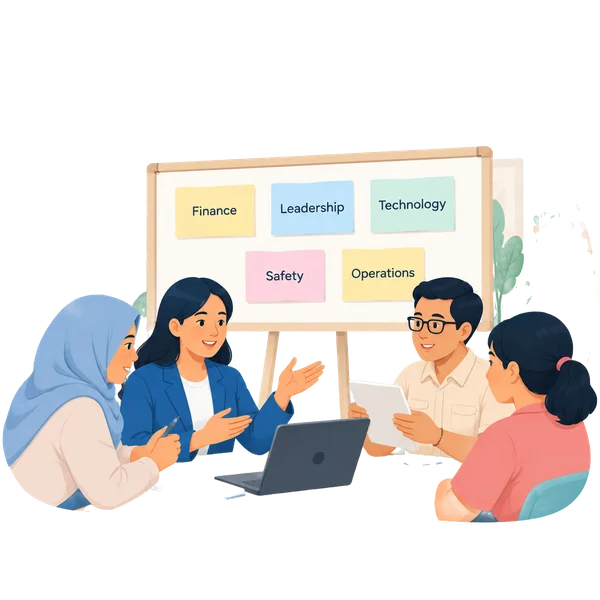
- Assess industry challenges and existing practices.
- Conduct a training needs analysis to identify common pain points.
- Consult government representatives, ECCE associations, experts and practitioners.
Developing the Coaching Framework
Translating the identified needs into a practical coaching programme.
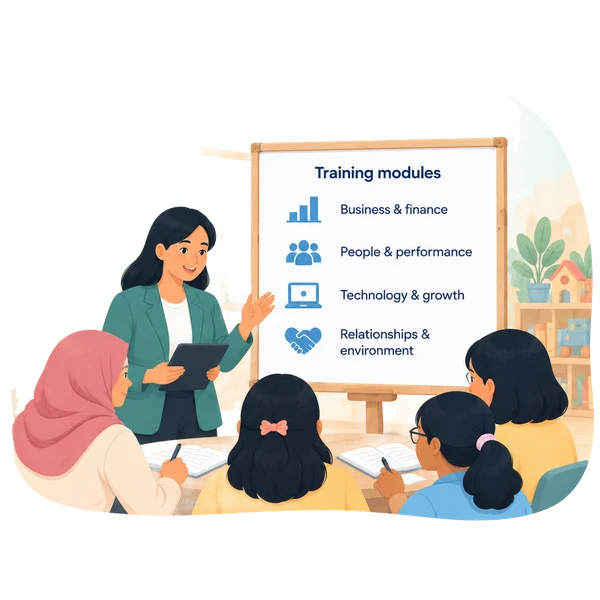
- Develop 8 integrated training modules with subject matter experts.
- Deliver training & 7 weeks of structured coaching to selected TASKA/TADIKA operators.
- Provide opportunities for participants to apply new approaches to their centres’ operations.
Reviewing & Refining the Framework
Understanding the needs of ECCE operators and the gaps affecting their sustainability.
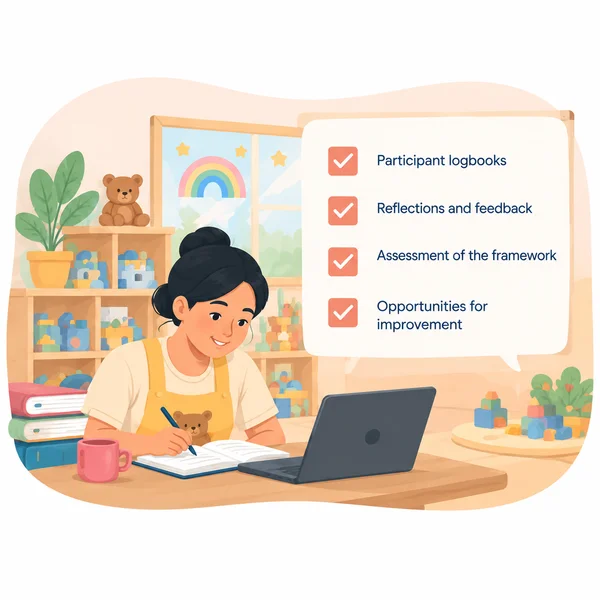
- Review participant logbooks, reflections and feedback.
- Identify opportunities to improve the coaching framework.
- Develop recommendations for wider implementation and potential policy consideration.
Reflections
This study highlights the need to strengthen the financial and business resilience of MSME ECCE operators to sustain essential childcare and early learning services. Through stakeholder engagement and a seven-week coaching programme, the research developed eight training modules tailored to operators’ business and management challenges. The partnership between INCEIF University and Wanita Berdaya Selangor (WBS) creates opportunities to extend this work, with the coaching modules expected to be considered for wider training initiatives championed by the Selangor State Government. With further impact assessment and continued collaboration, the framework could contribute to a more resilient and sustainable ECCE ecosystem.
COVID-19 disruptions to early childhood care and education worldwide resulted in an estimated loss of 19.01 billion instructional days, with 10.75 million children forecast to lag in early development.
Advancing Maslahah
The study proposes four areas to strengthen the sustainability of Malaysia’s early childhood care and education (ECCE) sector. These include continuous professional development to equip TASKA and TADIKA operators with stronger management skills; financial and operational support to improve business resilience; collaborative networks to encourage knowledge sharing among operators; and policy advocacy to strengthen institutional support for the sector.
The recommendations outline a phased approach, from practical short-term actions such as training schedules, financial toolkits and awareness campaigns, to longer-term proposals including national operator certification, a dedicated support fund and stronger ECCE policy coordination.
Request Policy BriefSupporting National Aspiration

This research supports the following Sustainable Development Goal (SDG):
About the Research

Project Title
Coaching Framework for the Sustainability of the MSME ECCE Operators

Explore the full research
Discover the full report, methodology, findings and policy recommendations.
For the research report and policy brief, please contact the research team.